
24 – 26 Baker Street, London, W1U 3BZ
The primary purpose of a restaurant is to feed. The best of them do so with a warmth and grace that does justice to the term “hospitality”. Some restaurants seek to capture a zeitgeist whilst others seem to want to entertain, which is fine, as long they don’t neglect the whole point of a place where people go to eat. But all too often they do, because the “experience” becomes one that is shaped by the venue’s “concept”, and not one that is derived from pleasing diners. Thankfully, though, some restaurants retain a single-minded focus on feeding, and nowhere is this mission better seen in action than on a weekend lunchtime at Royal China on Baker Street.
The Royal China Group can certainly do fancy bling. If that’s your bag, then you’ll enjoy the recently-revamped (but still confusingly named) Royal China Club just up the road. There, a reliance on premium ingredients (foie gras, Wagyu beef, abalone – all present in various (dis)guises) is clearly intended to “push food quality and presentation to the next level” and, no doubt, Royal China Club can hold its own against the many fine dining Chinese restaurants that have opened up in London in the last couple of years.
However, fifty yards south of Royal China Club is Royal China. At weekend lunchtimes, you’ll spot the place from the queues outside it, which start to form 15-20 minutes before opening time. Usually, within half an hour of the doors opening, all 250 seats in the restaurant are taken. For the next few hours, 30 chefs (5 of whom are dedicated to preparing and cooking dim sum alone) pump out a relentless stream of dishes. Royal China appears on most “best dim sum in London” lists, and whilst it might not reach the excellence of an early-years Hakkasan, the food is always fresh, often excellent, and never worse than good. Prices are reasonable for central London (though out-of-towners – particularly those with favourite local venues of their own – may protest otherwise). From the lengthy dim sum menu, typically supplemented by a list of more innovative specials, stand-outs include muscular pieces of pork and prawn siu mai, where actual pieces of the headline elements are readily identifiable, as opposed to minced into anonymity, soft gyoza with prominent notes of ginger, flaky roast pork puffs, sesame prawn rolls – a very rich man’s prawn toast – and pork dumplings in a chilli sauce (more of a broth really) that’s good enough to drink. Other personal favourites from the main menu include the tenderest char siu pork, and noodles with minced beef and pickled vegetables – the most unexpected of comfort foods. The Peking duck has, on occasion, been a little greasy, but when it’s good, it serves as a reminder of why the more common crispy aromatic duck is a waste of a good bird.

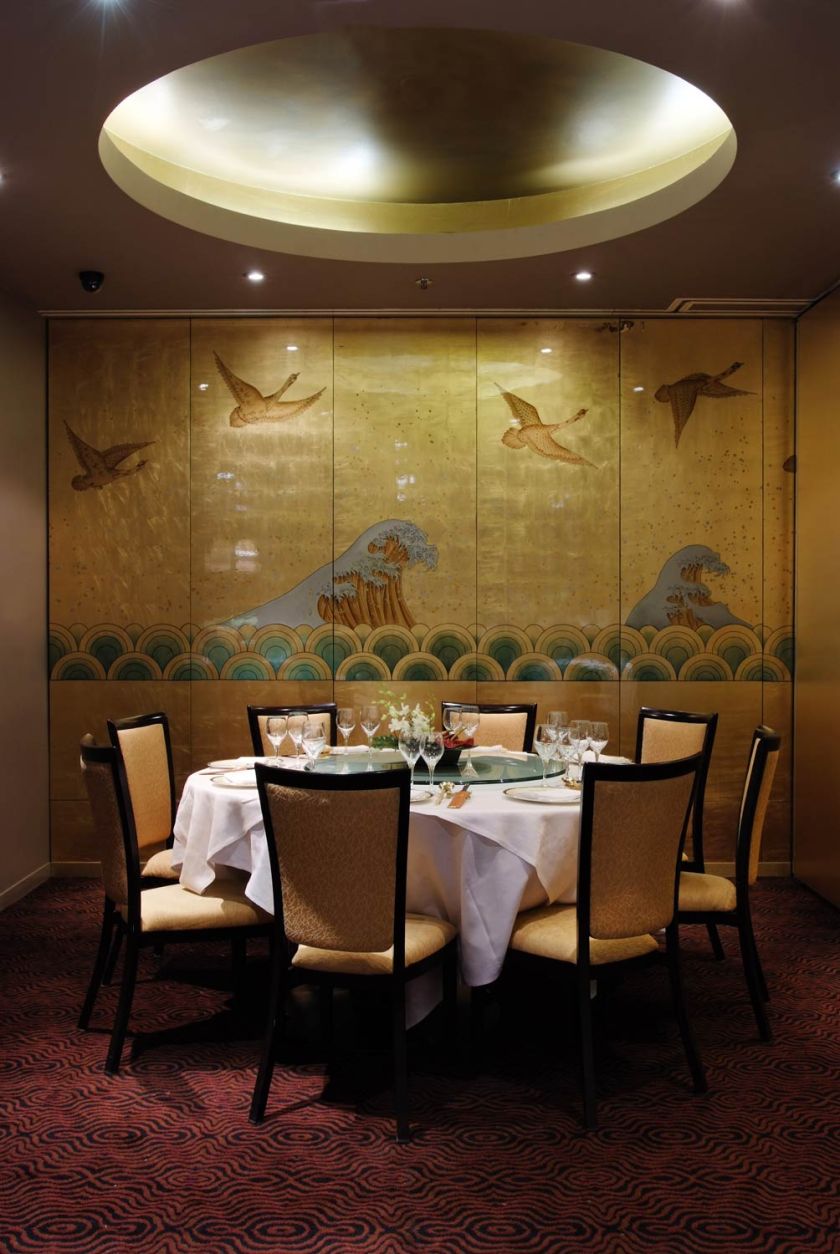
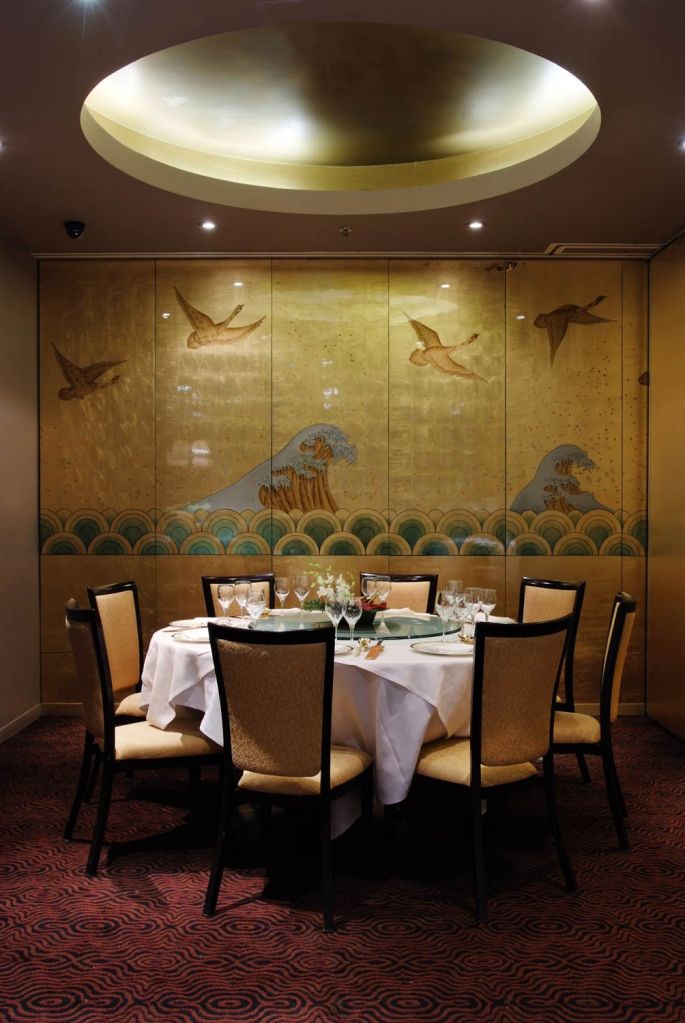
There is nothing about the surroundings at Royal China to distract diners from the job of eating. A big room, devoid of any architectural feature, presents tables as far as the eye can see. The attempt at elegance – a white linen tablecloth here, a bit of gold leaf or black lacquer there – is largely superficial; if you look carefully, it all feels a little tired. Some nondescript “music” plinks away in the background, but not so that you ever really notice it. It’s doubtful whether anyone eating at Royal China gives a shred of pickled cabbage about any of these elements.
With one or two exceptions (Hello Kitty!) the service is largely charmless, and does little more than get the food to the table, albeit swiftly. Somehow, though, this basic functionality is forgivable given the unrelenting pressure that the staff are under from the moment the restaurant opens, and for many hours after that. Despite this pressure, there seems to be a good bond between restaurant and service staff, because many of the latter stay long enough to graduate from entry-level tray carriers to suited management.
Lunch will be over in an hour or so, certainly less than two, but not because of some kind of graceless time limit on how long diners are welcome at Royal China; rather, kitchen and front of house operate with well-practiced synchronicity and efficiency, and that’s just how long it seems to take to feed people and send them happily on their way.
Royal China brings people together. It is difficult to think of any other restaurant in London that caters to such a broad constituency of diners. Young and old, modest and ostentatious, Londoners and travel-guide bearing tourists, friends and business acquaintances, singles and couples, tables for one and tables for ten, all alongside each other. (Indeed, the lack of fuss involved in accommodating larger parties puts other less welcoming restaurants to shame.) It is curious that so many restaurants, despite operating in such an unforgiving industry, seem to reject the idea of a broad customer base, and instead seek to appeal to the type of patrons who will inevitably move on to the next shooting star of a restaurant before it, too, burns away. At Royal China, everyone is welcome, and isn’t that the whole point of hospitality? No doubt, eating out can be an intellectual experience, and perhaps even entertainment too. But there’s a reason why so many people queue in a chaotically small reception area, and then down the street, to eat at Royal China, and why those queues are enduring. And that’s because there is a simple, yet fundamental, satisfaction that comes from being fed well. A restaurant that doesn’t seek to draw attention to itself – whether through its design, food, or even clientele – but that focuses on feeding its customers food that they want, makes those customers happy. And making people happy brings out the best in them. They chat, they laugh, they connect. They fill a cavernous room with a happy din. And they like that feeling, so they come back for more. It doesn’t seem like a complicated formula, but not many seem to get it as right as Royal China.

 a-bit-of-a-mouthful.com